When abrasive costs are challenged, stop comparing prices. It’s more prudent to fully understand which abrasive gives you the required finish, at the required speed, with the lowest total cost of doing the job properly?
The right blast media is not simply the cheapest media. It is the one that best fits the substrate, the finish you need, the equipment you are using, the environment you are working in, and the commercial outcome you are trying to achieve.
Get that choice right and you can improve cleaning speed, finish consistency, media efficiency and cost per part.
Get it wrong and the “saving” on purchase price can quickly disappear in slower blasting, higher consumption, more dust, more waste, greater equipment wear and avoidable rework.
Abrasive selection is a process decision, not just a purchasing decision
Abrasive choice sits at the centre of blasting performance.
It affects:
- cleaning speed
- surface profile
- finish consistency
- dust generation
- media consumption
- recyclability
- equipment wear
- rework risk
- downstream coating performance
That means abrasive selection should not be based on price alone, or on habit.
It should be made in context.
A media that works well on heavy steel fabrications may be the wrong choice for stainless components, non-ferrous parts, decorative finishing, delicate masonry, confined environments or cabinet-based recycling systems.
This is why blasting media should be selected as part of the whole process, not as an isolated line item.
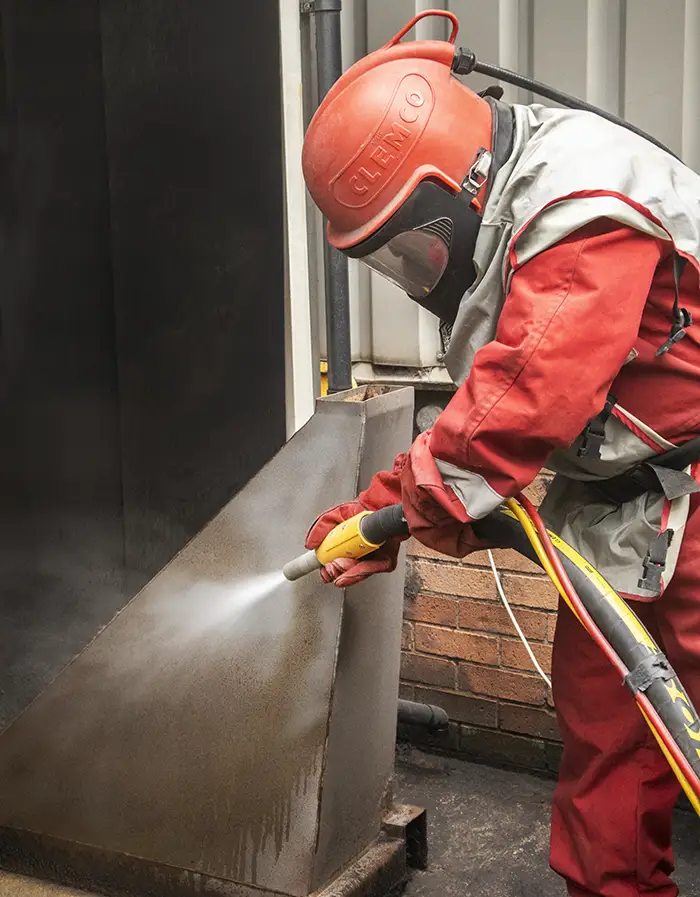
The six abrasive properties that most affect blasting performance
1. Density
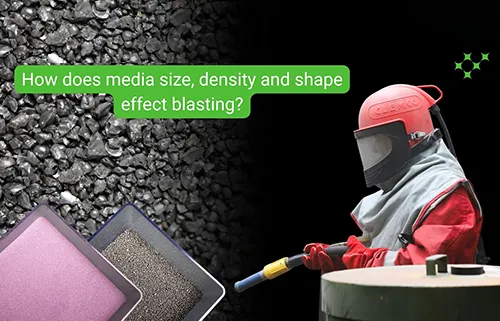
Density affects impact energy.
In simple terms, denser abrasives tend to hit harder. That can improve cleaning speed and help create a stronger surface profile on tougher substrates.
That can be useful when the goal is fast coating removal or a more aggressive anchor pattern.
But higher impact energy is not always an advantage. On softer or more delicate substrates, it can be excessive and may create unnecessary damage or over-profile.
2. Particle size
Particle size influences both profile and coverage.
Larger particles can produce a deeper profile. Smaller particles create more impacts across the surface and can often produce a more even finish.
In many applications, the most efficient choice is the smallest particle that will still achieve the required profile.
This is where many abrasive decisions go wrong. Teams often assume coarser media means faster blasting. Sometimes it does. Sometimes it simply creates a rougher finish, uses more media and reduces consistency.
3. Recyclability
Recyclability changes the economics of the process.
Expendable abrasives are commonly used in open blasting where recovery is limited. Recyclable abrasives are usually more viable in blast cabinets and blast rooms where recovery, separation and dust extraction are built into the system.
That distinction matters.
If you are running an enclosed system with proper recovery, reusable media may offer a more stable process and lower long-term operating cost, even if the purchase price is higher.
4. Dust levels
Dust affects far more than housekeeping.
It affects:
- visibility
- operator control
- containment
- clean-up time
- environmental management
- health and safety risk
- consistency of process conditions
In open blasting or sensitive environments, dust can quickly become a major operational problem. In enclosed systems with suitable extraction and ventilation, it can be managed more effectively, but it still matters.
Choosing an abrasive without considering dust is a classic example of solving one problem and creating three more.
5. Media shape
Shape influences how the abrasive interacts with the surface.
Angular abrasives are usually better where cutting action, coating removal and profile creation matter.
Rounded or spherical media is often more suitable for cleaning, peening, smoothing or achieving a more refined finish.
That means shape should be selected according to the actual process objective, not just the material being blasted.
6. Hardness
Hardness affects both cutting behaviour and media life.
Harder particles can create a deeper profile and may last longer in the right system. But hardness must be balanced against substrate sensitivity, finish requirement and the way the particle behaves at velocity.
A very hard abrasive is not automatically the best option. In some applications, it can be too aggressive. In others, particle breakdown may reduce efficiency.
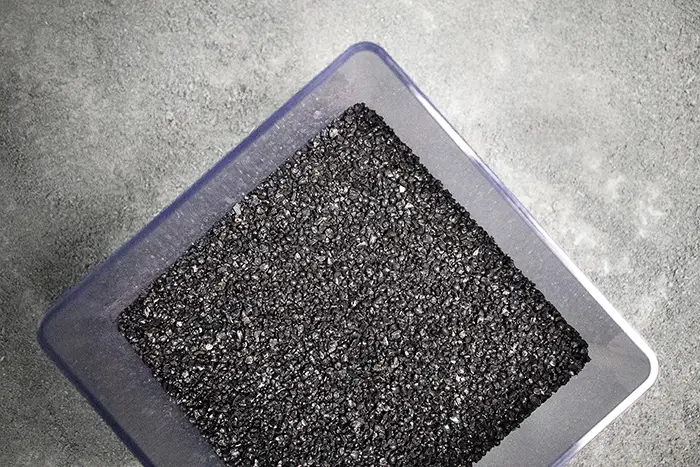
How the substrate changes the right abrasive choice
The right abrasive for structural steel is not automatically the right abrasive for stainless steel, aluminium, composites, stone or delicate restoration work.
For structural steel
If the objective is coating removal or preparation for a new protective coating, the priority is often a consistent, coating-ready profile delivered at a reliable cleaning speed.
In those cases, denser and more aggressive media may be appropriate, depending on the contamination, coating system and finish specification.
For stainless steel and non-ferrous parts
Compatibility matters far more.
Contamination risk becomes a serious issue, so media selection should take account of the substrate itself, not just the blasting task. Using the wrong abrasive can create downstream quality problems that are not obvious during blasting but become costly later.
For delicate surfaces and controlled cleaning
When working on softer stone, wood, heritage surfaces, antiques or sensitive masonry, aggressive blasting is usually the wrong approach.
Here, the process needs to be controlled around low pressure, suitable equipment and fine, low-aggression media. The correct objective is not maximum force. It is controlled cleaning without surface damage.
That is the wider lesson. Abrasive selection should start with what the substrate can tolerate and what finish the job requires, then work backwards into media choice.
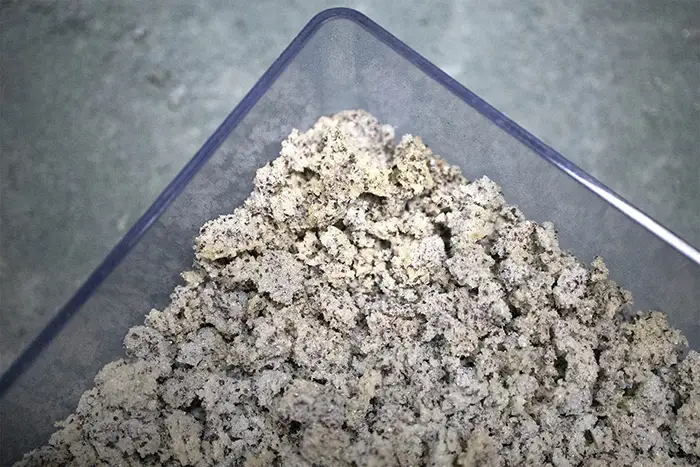
For delicate surfaces and controlled cleaning
Before choosing a blasting media, define the finish.
Ask:
- Do you need a coating-ready profile?
- Do you need cosmetic uniformity?
- Are you cleaning without changing the surface significantly?
- Are you removing contamination only?
- Are you peening or polishing?
- Are you trying to preserve a delicate surface?
These are not minor differences. They lead to different abrasive choices.
A buyer who starts with price alone is asking the wrong first question.
The right starting point is: What must the finished surface look like, and what must it be ready for next?
Why the blasting environment matters
The blasting environment changes what is practical, efficient and economical.
Open blasting
In open environments, expendable media is often more realistic because recovery is limited, containment is harder and waste handling becomes part of the operating cost.
Dust control and visibility are usually bigger factors too.
Blast cabinets and blast rooms
In enclosed systems, the calculation changes.
If the equipment includes media recovery, classification and dust extraction, recyclable abrasives can become far more viable. In the right setup, that can reduce waste, improve media efficiency and create a more stable process.
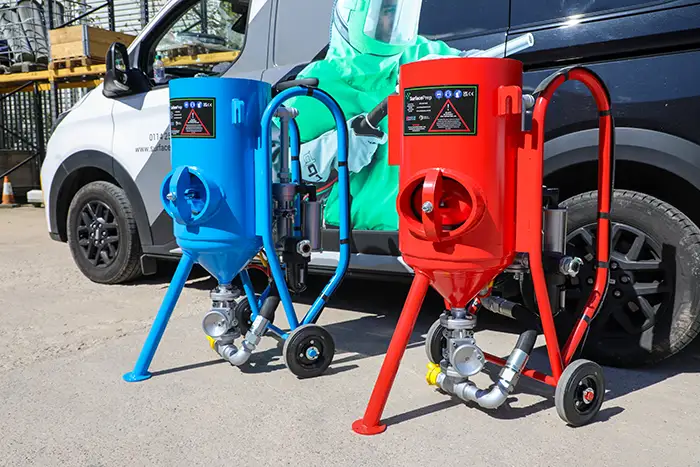
Equipment type also matters
Media should never be selected without reference to the machine.
Abrasive behaviour changes according to:
- pressure feed or suction feed
- nozzle size
- hose condition
- recovery design
- separator efficiency
- extraction performance
If the machine, media and environment are not working together, the process will not perform as well as it should.
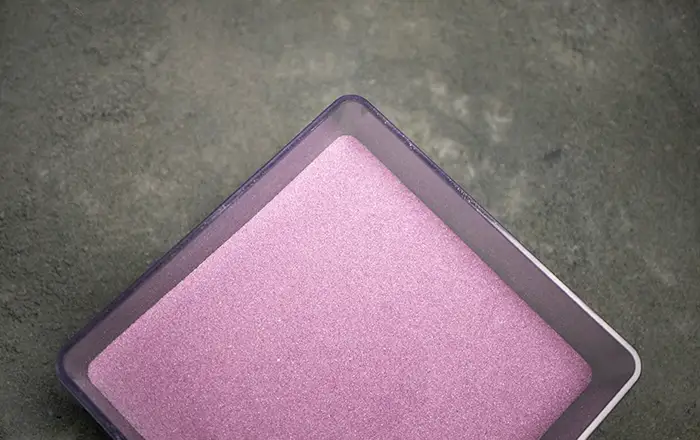
Why the cheapest abrasive can become the most expensive option
This is the assumption most worth challenging.
A lower purchase price may look attractive in a spreadsheet. But if that abrasive:
- cleans more slowly
- breaks down faster
- generates more dust
- creates the wrong profile
- increases consumption
- causes more waste
- wears equipment faster
- increases rework
- creates downstream coating issues
then the real process cost rises.
That is not a marketing claim. It is basic operational logic.
A cheaper abrasive can increase:
- blast time per part
- media use per job
- clean-up time
- waste handling cost
- nozzle and valve wear
- finish inconsistency
- touch-ups and rework
- total cost per part
This is why abrasive choice should be assessed against total process performance, not purchase price in isolation.
A simple framework for choosing the right abrasive
A better abrasive decision usually follows six steps.
1. Define the substrate
What exactly are you blasting, steel, stainless steel, aluminium, composite, stone, masonry or a more delicate material?
2. Define the required finish
Do you need profile, cleaning, cosmetic refinement, contamination removal, peening or controlled low-aggression cleaning?
3. Define the environment
Is the work being done in the open, in a blast cabinet or in a blast room? Can the media be recovered? How sensitive is the site to dust and waste?
4. Define the productivity requirement
Is this a one-off task, intermittent workshop use or a repeatable production process where throughput and consistency matter?
5. Match media properties to the actual job
Select density, particle size, shape, hardness and recyclability based on process need, not on assumption.
6. Validate before full-scale use
Where the application is commercially important, validate the media choice before scaling. Testing the abrasive, machine setup and finish outcome in advance reduces risk and prevents expensive guesswork.
A smarter abrasive decision starts with the whole process
The real mistake is not simply choosing the wrong abrasive.
It is treating abrasive selection as a purchasing exercise when it is really a process-performance decision.
When you assess abrasive choice through the full lens of substrate, finish, equipment, environment and total process cost, better decisions become easier.
You reduce false economies. You improve consistency. You protect downstream quality. And you give the process a better chance of delivering the required result at the right cost.
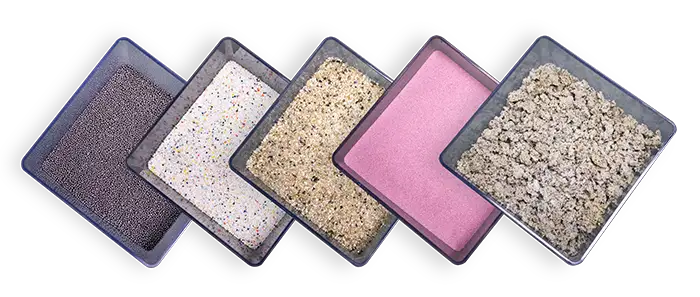
Need help choosing the right abrasive?
If you want to sense-check your current media choice, finish consistency or blasting setup, SurfacePrep can review the process with you and help match abrasive selection to the real operating requirement.
Request an abrasive and process review
Or, if you want a faster starting point:
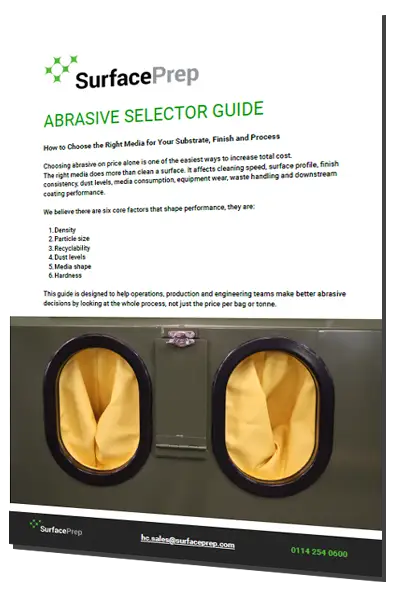
Download the abrasive selector guide
How to Choose the Right Media for Your Substrate, Finish and Process
This guide is designed to help operations, production and engineering teams make better abrasive decisions by looking at the whole process, not just the price per bag or tonne.