
When blasting output drops, most teams default to two explanations: you need a bigger machine, or the blaster needs to work faster.
Neither is usually true.
In practice, the constraint is almost always one of four things:
- Time loss from handling, changeovers, waiting, or inspection delays
- Compressed air constraints such as pressure drop under load, leaks, or a nozzle and compressor mismatch
- Abrasive media constraints including the wrong media, excessive breakdown, dust, or slow recovery
- Rework pulling parts back into the cycle due to inconsistency or unclear acceptance criteria
The blasting equipment is often fine. The system around it is not.
This check is designed to run during a live shift without stopping production. All you need is a phone timer, a notepad, and the gauges already on the system.
The rapid bottleneck method: Observe, Confirm, Isolate, Act
Phase 1: Observe what is actually happening
Stop guessing and measure where time is really going.
Pick a representative 20 to 30 minute window, not the easiest parts and not the worst. Stand where you can see the full cycle: load, blast, unload, inspect, move on.
Time three full cycles and record just four numbers:
- Hands-on blast time
- Handling time (loading, unloading, masking, repositioning)
- Waiting time (queueing, air recovery, media recovery, inspection delays)
- Rework signals (rejects, parts needing another pass, inconsistent finish)
What you are looking for is any chunk of time that repeats every cycle. That repetition is usually the bottleneck.
Phase 2: Confirm the category
Use what you observed to aim your checks at the right place:
- Long blast time suggests an air or media issue
- Long waiting time suggests recovery, extraction, air recovery, or inspection flow
- Rework showing up suggests media choice, nozzle condition, air stability, or inconsistent method
Phase 3: Isolate the specific failure
Do not work through everything. Start with the section that matches what you saw in Phase 1. The goal is to fix the right thing once, not run a full audit.
Phase 4: Act and lock it in
Make the fix. Re-time three cycles.
- If throughput improves, record the new baseline readings and add the check to your shift routine.
- If it does not improve, move to the next most likely cause.
Blasting Bottleneck Checklist
A) Time checks: find hidden waiting and handling
A1. Queue check
Look for parts stacking up before blast, or blasted parts sitting idle afterwards.
Fast test: Count WIP in front of blast and after blast at two points in the shift.
Good: steady flow, small buffer, no build-up.
Bad: the bottleneck is not blasting, it is upstream handling or downstream inspection and packing.
Next action: Move inspection closer to blast, adjust staffing at the constraint, simplify sign-off.
A2. Touch time vs cycle time
Look for excessive non-blast time per part such as masking, repositioning, moving fixtures.
Fast test: Time one part and split it into blast minutes vs everything else.
Good: blast time is the dominant activity.
Bad: fixturing, handling method, or layout is the real constraint.
Next action: Improve fixturing, batch similar parts, reduce changeovers.
A3. Changeover frequency
Look for repeated stops to change media, nozzles, settings, PPE, or filters.
Fast test: Log every interruption over a 60-minute window.
Good: predictable routine, few unplanned stops.
Bad: poor standard work, spares not staged, consumables not planned.
Next action: Build a ready rack for wear parts, standardise setups, pre-stage consumables.
B) Air checks: the most common hidden constraint
B1. Pressure drop under load
Pressure often looks fine at idle, then collapses during blasting.
Fast test: Record pressure at the pot or regulator before blasting, then during blasting.
Good: stable pressure under load.
Bad: compressor cannot sustain demand, or restrictions and leaks are bleeding off pressure mid-cycle.
Next action: Check for leaks, restrictions, filter condition, hose length, plus hose diameter. Then validate compressor capacity vs nozzle demand.
B2. Nozzle and compressor mismatch
Look for slow cutting, long dwell times, or operators having to work harder to hit spec.
Fast test: Confirm nozzle orifice size and compare it to compressor delivery at working pressure.
Good: nozzle size matches available air.
Bad: nozzle is oversized for the system, performance is capped and technique changes will not fix it.
Next action: Correct nozzle size or increase air capacity. Do not chase settings when the root cause is capacity mismatch.
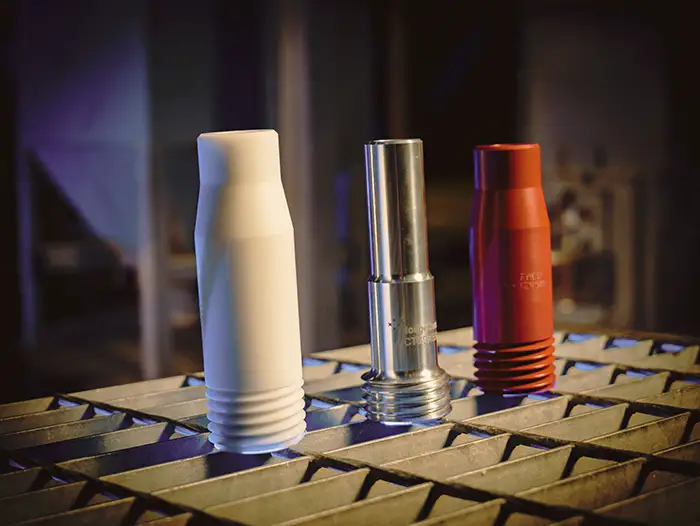
Worth knowing on site: Nozzle orifice size has a major effect on CFM demand. If your system is running near its limit, it will feel like “blasting is slow” even when everything else is working.
B3. Leak and restriction sweep
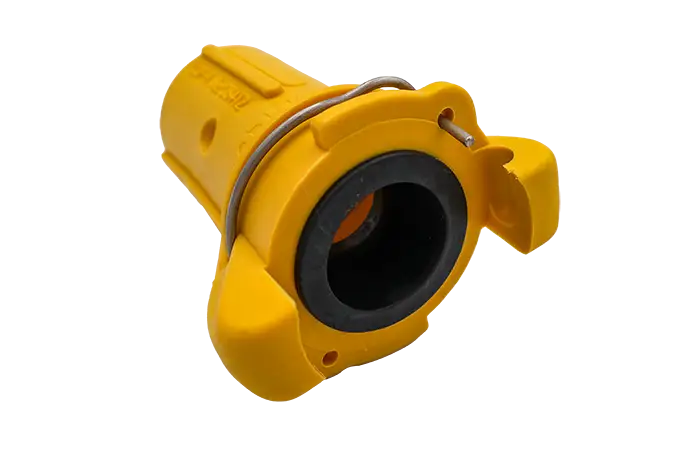
Look for audible leaks, cracked couplings, kinked hoses, worn deadman controls.
Fast test: Walk from compressor to nozzle and listen as well as look.
Good: no leaks, clean couplings, hoses in good condition throughout.
Bad: wasted air, unstable pressure, unpredictable finish.
Next action: Replace worn couplings, repair leaks, shorten hose runs where layout allows.
C) Media checks: cutting rate, dust, flow and recovery
C1. Abrasive fit for the job
Look for slow stripping, excessive passes, inconsistent surface profile.
Fast test: Confirm abrasive type and shape against the coating and finish specification.
Good: predictable cutting, consistent profile, controlled dust.
Bad: wrong media choice, or media breaking down too quickly, generating dust and slowing cutting.
Next action: Change abrasive grade or type. Trial a denser or more suitable media where the current choice is underperforming.
Look for operators stopping frequently, poor visibility, inconsistent finishes.
Fast test: Observe visibility during blasting and check whether extraction is keeping pace.
Good: consistent visibility, extraction coping with load.
Bad: abrasive breakdown, contaminated media, or extraction not matched to volume.
Next action: Review media condition and maintenance frequency, service extraction, improve housekeeping at collection points.
C3. Media recovery not keeping up
Look for operators waiting on media, uneven flow, recovery system backing up.
Fast test: Ask directly, “Are you ever waiting for media?”, then watch the recovery cycle and check collection points.
Good: stable feed, recovery keeps pace.
Bad: a hopper, conveyor, or recovery component is throttling throughput.
Next action: Inspect recovery components, clear choke points, set a maintenance rhythm before it becomes a production issue.
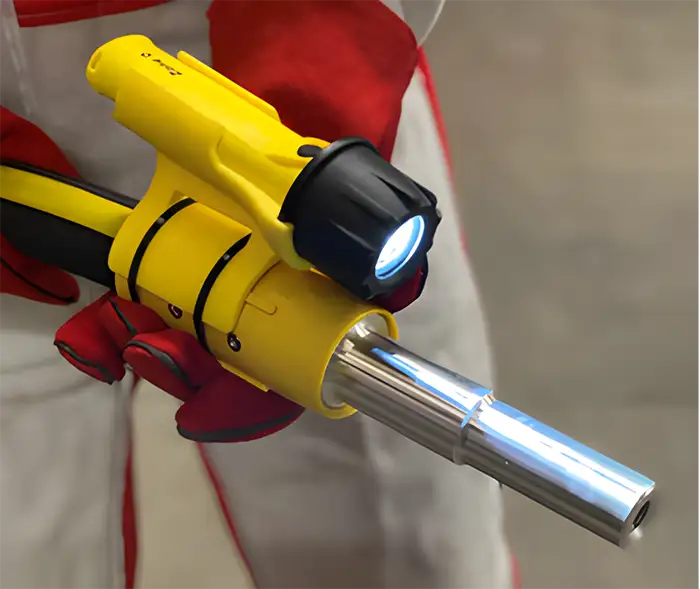
D) Rework checks: the throughput killer
D1. Reblast rate
Look for parts coming back for another pass.
Fast test: Count reblasts per hour or per batch across a shift.
Good: reblasting is rare and limited to known exceptions.
Bad: unstable process is generating rework at volume, often pressure variability, media breakdown, nozzle wear, inconsistent technique.
Next action: Standardise distance and angle, stabilise air, check nozzle wear, stabilise media condition. Fix the root cause, not the symptom.
D2. Spec clarity
Look for rejections where there is no measurable standard behind the call.
Fast test: Check what is being inspected and what pass or fail means in practice.
Good: clear acceptance criteria applied consistently.
Bad: subjective inspection drives rework and delays with no reliable way to reduce them.
Next action: Define measurable criteria, agree reference panels, align inspection method across the team.
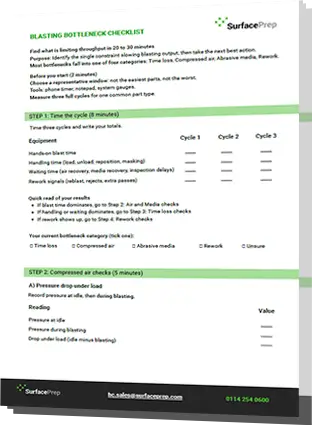
Download the Blasting Bottleneck Checklist
A one-page bottleneck map to help you isolate whether the constraint is time, air, media, or rework, with the fastest checks and clear next actions for each.
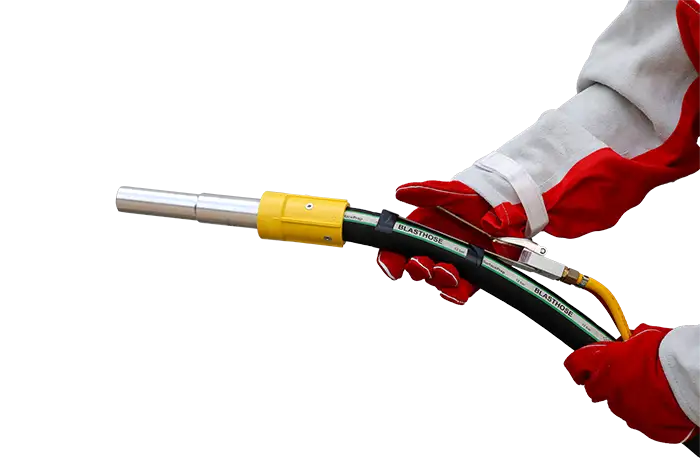
A common on-site example: pressure drop under load
Symptom: “Blasting is slow and inconsistent. We keep missing output targets.”
Assumption: retrain the blaster, or buy a bigger machine.
What was actually happening: the system was air-starved under load. Pressure looked acceptable at idle. Under blasting conditions it dropped, operators compensated by slowing down and adding extra passes. That created rework, not because the finish target changed, but because the process became unpredictable.
The check that revealed it:
What is your current yield, what percentage is deemed a fail and identify what the failure is and separate the failures to pinpoint which area of failure could be addressed to increase the yield.
- Record pressure before blasting, then during blasting
- Confirm nozzle orifice size and compare it to compressor output at working pressure
What they fixed:
- Resized the nozzle to match available air
- Replaced worn couplings and repaired a leak that had been treated as normal
- Re-timed three cycles
Result: Blast time fell. Rework dropped because finish consistency returned. Why it matters: If air delivery is the limiting factor, you can waste weeks changing media grades and coaching technique without moving throughput. Fix the constraint first.
FAQs
What is a blasting bottleneck?
A blasting bottleneck is the single constraint that limits output, usually one of four categories: time loss, compressed air, abrasive media, or rework. Fixing anything outside the true constraint rarely improves throughput for long.
How long does this bottleneck check take?
You can get a reliable answer in 20 to 30 minutes by timing a few cycles and checking pressure under load. The goal is not a full audit, it is to identify the constraint and act.
What is the fastest way to tell if compressed air is the problem?
Check pressure at idle vs pressure during blasting. If pressure drops under load, your system is air-limited even if the gauge looks fine when the trigger is not pulled.
Does a bigger compressor always increase blasting throughput?
Not always. If the constraint is handling, recovery, extraction, inspection flow, or rework, more air will not fix the real problem. Confirm the bottleneck category first, then invest.
How do I know if my nozzle size is wrong?
If cutting feels slow, operators add extra passes, and pressure stability is poor, you may have a nozzle orifice size that exceeds available CFM at working pressure. The simplest check is to confirm nozzle orifice size and compare it to compressor delivery at that pressure.
Can be verified using our air consumption calculator on the Surfaceprep website readily available.
What are the most common causes of slow blasting?
On-site, the most common causes are:
- Pressure drop under load caused by leaks, restrictions, undersized hoses, or compressor limits
- Worn nozzle increasing air demand and reducing control
- Media breakdown and dust reducing cutting efficiency and visibility
- Handling and changeovers dominating cycle time
- Rework from inconsistency or unclear acceptance criteria
- Operator NOT understanding SA standards and specs there is a fine line between SA standards and blast operators tend to over achieve these standards which is time consuming and costly in both media and compressed air usage
- Likewise under achieving SA standards requires re work which can increase blast time exponentially.
What should I measure first, time or air?
Start with time, because it tells you where to focus. If hands-on blast time dominates, go straight to air and media checks. If waiting and handling dominate, the bottleneck is likely outside blasting.
Why is rework such a big throughput killer?
Because it doubles effort without doubling output. Rework usually signals process instability, such as variable air delivery, nozzle wear, inconsistent technique, or unclear standards. Reducing rework often lifts throughput faster than “blasting harder”.
Can this method work for blast rooms, cabinets, and automated lines?
Yes. The structure stays the same. The checks simply shift slightly:
- Manual blasting: technique, nozzle wear, pressure stability, handling flow
- Cabinets: media condition, extraction, gloves, visibility, dwell time
- Automated lines: air capacity, media feed consistency, recovery speed, rework loops
What is the best first fix if we are unsure?
Fix the obvious low-cost issues first:
- Repair leaks and replace worn couplings
- Confirm nozzle condition and orifice size
- Remove restrictions in hoses and fittings
- Re-time three cycles after each change
If results do not move, your bottleneck is likely handling, recovery, extraction, or inspection flow.