
If your operators wear air-fed blasting helmets or breathing apparatus, the compressed air line is life support. Breathing air typically originates from a compressor system at the point of use, and the quality can change quickly if intake conditions, compressor performance, filtration condition, temperature, or the air supply components drift out of control.
This guide explains what EN 12021 is trying to achieve, what can go wrong, what to test for, how often to test in the UK, what records to keep, and a practical compliance checklist you can implement this week.
What EN 12021 is trying to achieve
EN 12021 is referenced as the breathing air quality framework, to provide information on safe limits of potential contaminant gases and to ensure oxygen is at an adequate level.
Supporting guidance in the excerpt also states that air supplied to breathing apparatus should be clean and safe to breathe, and that compressor supplied air should meet the quality requirements in BS EN 12021, alongside the pressure and airflow rate requirements of the breathing apparatus manufacturer.
Employers have a duty of care to ensure breathing air is safe to breathe and adequate for the RPD being used. The failure modes below may form part of the risk assessment called for in EN 529 guidance.

Why breathing air can become unsafe, quickly
A robust approach is not a one-off check, it is a control system, with verification and records that stand up to inspection.
Breathing air quality is affected by the entire chain, from compressor intake to filtration, aftercooling, dryers, distribution, hoses, and the final control equipment at the user. A weakness anywhere in that chain can compromise air quality or air delivery.

What can go wrong with breathing air on site
- Intake contamination
Compressor air intakes can ingest airborne contamination from local processes and vehicle exhaust fumes. This contamination is not removed by standard breathing air filtration and may persist for hours, or even days. - Compressor faults creating dangerous gases
Malfunctioning compressors, especially reciprocating types, can produce unsafe levels of carbon monoxide and carbon dioxide. - Filtration life expiry or failure
Breathing air filtration has a finite life and can fail, allowing high levels of oil and water contamination. - Desiccant performance drift
Desiccant filter performance is dramatically affected by operating temperature. Infrequent validation can mean poor quality air is supplied for an extended period. - Aftercooler failure leading to premature filter failure
After cooling failure can drive air into filtration at too high a temperature, causing filtration to prematurely fail and pass excess oil and water. - Dryer malfunction affecting air quality and stability
Malfunctioning dryers can disrupt the moisture control required for safe, reliable breathing air supply. - Water freezing and causing supply failure
High levels of water in breathing air can freeze within RPD demand valves and cause the air supply to fail. - Insufficient airflow or pressure reducing protection
Insufficient airflow or pressure to the RPD can reduce the protection factor of the RPE and expose the user to ingress of external contaminants. - Non-compliant air supply hoses or materials
Using the wrong air-fed hose type, wrong material specification, or worn, damaged hose components can introduce risk. Hoses must be suitable for breathing air systems, compliant with relevant industry requirements, and appropriate for the application. In spray booth environments, hoses must be solvent resistant. Some non-compliant hoses may contain materials that are not suitable for breathing air use.
Testing breathing air, what to test, how often, and how to record it
Why test?
Periodic testing exists to confirm the control measures you have put in place are delivering the air quality required, under real working conditions. Testing turns assumptions into evidence.
How often should breathing air be tested in the UK?
In the UK, the preface to EN 12021 advises samples should be taken and analysed at least every three months, and more often if there has been a change in, or concerns relating to, production processes.
HSE guidance (HSG53) also says frequency should be based on risk assessment, but tests should take place at least every three months, and more often when the quality of air cannot be assured.
For mobile breathing air compressors, COSHH requires employers to ensure that wherever a compressor is located, the quality of air it supplies is not compromised by nearby contaminants. The excerpt strongly recommends testing whenever a mobile compressor is first moved into a new position, or when prevailing wind conditions change.
The final decision on test frequency remains the employer’s responsibility. It should be built into the risk assessment and updated based on results and site changes.

What should you test for?
The equipment described measures:
- Carbon monoxide
- Carbon dioxide
- Water or moisture
- Oil
- In some instruments, oxygen
A robust breathing air test also considers the condition and suitability of the air supply system to the user, including whether the correct type of breathing air hose is being used for the application.
Record keeping, what inspectors expect to see
Record keeping is part of the control system. It is how you demonstrate breathing air is managed, verified, and traceable.
COSHH stipulates records should include:
- Employer name and address
- Equipment identification and maker
- Date of examination
- Tester identification
- Condition and defects found
For some RPE it also includes cylinder pressure. For powered or power assisted respirators and breathing apparatus, it includes volume flow rate checks to ensure minimum manufacturer recommended flow rate.
Records can be paper or electronic but must be accessible and retrievable. HSG53 advises keeping results for five years.
How SurfacePrep approaches breathing air testing and equipment
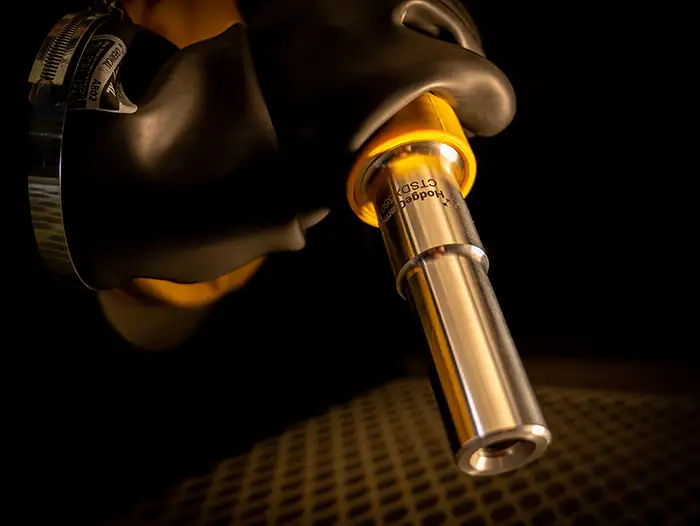
SurfacePrep can supply breathing air test equipment, including Dräger units, for customers who want to run checks internally. However, when SurfacePrep engineers attend site to conduct breathing air tests, they use calibrated FactAir systems.
This matters because the test method, calibration approach, and reporting format must be consistent with what is recorded on the certificate or report you keep for inspection.
FactAir testing also includes a sensory assessment step as part of the on-site process, alongside instrument measurements and practical system checks.
Purification and filtration, options and what buyers often miss
The excerpt describes mobile and fixed air purification filters that can be fitted to standard factory airlines or mobile compressors with aftercoolers. It also highlights an important operational truth, filtration is not a set-and-forget control.

CPF20 and CPF40
SurfacePrep supplies CPF20 and CPF40 breathing air filtration options. Selection should be based on the risk profile of the air source, the environment, and the controls required for the application.
Do not assume filter change intervals are the same across suppliers
Filter elements and media have different replacement requirements and life cycles depending on the manufacturer and the application conditions. All filters should be changed in accordance with the filter manufacturer’s guidance and the relevant OEM manual for the breathing air system. A “standard interval” is not a substitute for the correct specification and documented maintenance schedule.

When to stop and investigate immediately
Stop and investigate immediately if any of the following are suspected or observed:
- Suspected intake contamination from local processes or vehicle exhaust fumes
- Concerns about compressor malfunction, especially reciprocating compressors
- Signs of filtration life expiry or filter failure leading to oil or water contamination
- After cooling failure leading to excessive inlet temperature into filtration
- Insufficient airflow or pressure to the RPD
- Evidence the wrong type of air-fed hose is being used for the application, or the hose shows damage, contamination, or material incompatibility (for example non-solvent-resistant hose used in spray environments)
These are not “monitor and see” issues. They are potential failures of life support.

A simple compliance checklist you can implement this week
- Confirm breathing air is treated as life support for air-fed helmets and breathing apparatus.
- Site compressor air intakes away from the work area and upwind of contamination sources such as vehicle exhaust.
- Maintain, examine and test compressors to the manufacturer’s instructions.
- Set a breathing air test frequency based on risk assessment, at least every three months, and increase frequency when air quality cannot be assured or conditions change.
- For mobile compressors, test whenever moved to a new position, or when prevailing wind conditions change.
- Confirm the air supply hose is the correct breathing-air grade, correct material specification, and suitable for the application. For spray booth use, ensure hoses are solvent resistant. Check and replace hoses in accordance with the hose manufacturer’s guidance, the relevant OEM manual, and applicable industry requirements.
- Confirm all breathing air filters are changed in accordance with the filter manufacturer’s guidance and the relevant OEM manual. Do not assume all filters share the same life cycle or replacement interval.
- Choose an appropriate testing method and keep results accessible, retrievable, and retained for five years.
How SurfacePrep supports customers
SurfacePrep provides breathing air test services, equipment inspections and assessments, detailed reports, proposals for future maintenance, replacement parts, equipment upgrades, and operator training. If you want a documented breathing air test and a practical plan, you can book through the SurfacePrep TotalCare team (servicing).

FAQs
How often should breathing air be tested?
The excerpt states the UK preface to EN 12021 advises samples should be taken and analysed at least every three months, and more often if there has been a change in processes or concerns. HSE guidance (HSG53) also points to risk assessment but indicates tests should take place at least every three months, and more often when the quality of air cannot be assured.
What does a breathing air test cover?
Based on the excerpt, testing covers carbon monoxide, carbon dioxide, moisture or water, oil, and in some instruments’ oxygen. A proper on-site process also considers the condition and suitability of the breathing air supply system, including whether the correct air-fed hose type is being used for the application.
Do filter elements need changing every three months?
Not necessarily. Testing frequency and filter change intervals are different controls. Filter elements should be changed in accordance with the filter manufacturer’s guidance and the relevant OEM manual. Replacement requirements and life cycles vary by supplier, system design, and operating conditions.
Why does the air-fed hose specification matter?
Because hoses must be suitable for breathing air systems and appropriate for the environment. In spray booth applications, hoses must be solvent resistant. The testing and inspection process must be able to identify the type of air-fed hose in use and whether it is compliant and suitable for the application.
Who do we contact to book a breathing air test?
Book through the SurfacePrep TotalCare team (servicing) so your test, report, and follow-on actions are handled as part of a maintenance and compliance support process.

Breathing Air Checklist
Your site-ready checklist for supervisors, maintenance, and operators. Designed to support audit-ready best practice.
Book a breathing air test
Call 0114 254 1520 or email