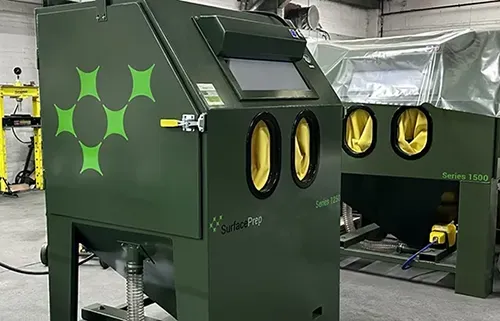
Abrasive Blast Cleaning
Abrasive blast cleaning uses abrasive blasting to remove unwanted material from a surface and leave it in the condition required for the next stage of manufacture, maintenance or coating. Typical tasks include removing rust, corrosion, mill scale, old coatings and other firmly attached surface contamination.
The required result should be defined before the equipment or abrasive is selected. The substrate, material being removed, required cleanliness and surface profile, production rate and blasting environment can all change the correct approach.
What is abrasive blast cleaning?
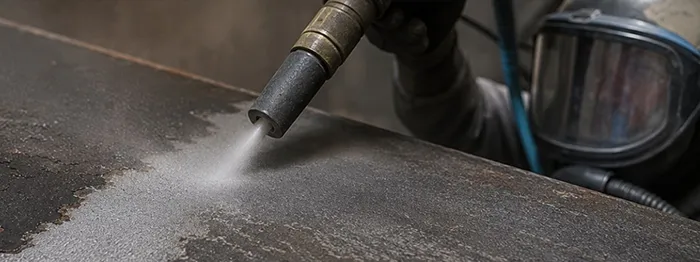
In a typical air-blast cleaning process, compressed air propels abrasive media through a nozzle and onto the surface. The impact of the media breaks away corrosion, coatings, scale or contamination. Depending on the abrasive and process settings, blasting can also alter the surface profile.
For the SurfacePrep website, abrasive blasting is the parent process and abrasive blast cleaning describes the cleaning and preparation applications carried out using that process. In industry, the terms are often used closely together, so the important distinction for the buyer is the outcome required.
What is abrasive blast cleaning used for?
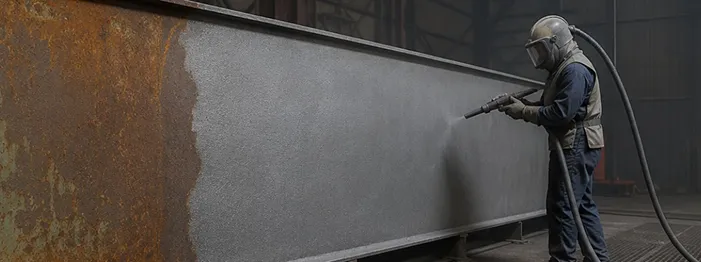
Abrasive blast cleaning can be used for tasks including removing corrosion from steelwork, stripping paint and other coatings, removing mill scale, cleaning fabrications and castings, and preparing surfaces before a new coating system is applied.
The required level of cleaning and profile is application-specific. A surface being prepared for a protective coating may have a defined cleanliness and profile requirement, while maintenance cleaning or component refurbishment may have a different specification.
That is why "cleaner" is not a sufficient process requirement. The finish needs to be defined in relation to what happens to the component next.
Where is blast cleaning carried out?
The operating environment is one of the first decisions to make.
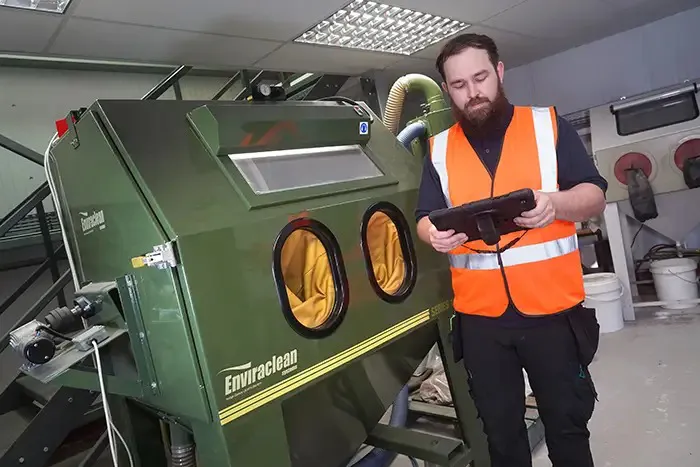
Portable or site blasting is appropriate where components or structures need to be treated in position. Enclosed blast cabinets provide a controlled environment for components that can be handled through a cabinet. Blast rooms allow larger items and production work to be processed in a dedicated enclosure with ventilation, extraction and, where required, abrasive recovery.
There are also specialist options for jobs where dust, access, portability or substrate sensitivity change the process, including wet or slurry blasting, low-pressure equipment and closed-circuit systems.
Blast cleaning equipment
There is no single blast cleaning machine for every application.
Portable blast machines provide flexibility for site work, large structures and changing work locations. Pressure blast cabinets are suited to more aggressive cleaning, tougher coatings and higher production rates. Suction cabinets generally use less compressed air and can suit lighter-duty cleaning and finishing. Blast rooms are designed around the size of the workpiece, production flow, operator requirements, dust extraction and media handling.
SurfacePrep's existing blast cleaning equipment guide explores these equipment categories in more detail. Once the cleaning requirement and environment are understood, that equipment page should be the next step in the buying journey.
Which abrasive is used for blast cleaning?
The abrasive determines much of what happens when the blast stream reaches the surface.
Selection can depend on the substrate, coating or contamination being removed, required cleaning rate, desired profile, equipment type, operating environment, dust considerations and whether the media will be recovered and reused.
For example, SurfacePrep supplies metallic abrasives such as steel grit and chilled iron for appropriate ferrous applications, aluminium oxides for a range of preparation and finishing duties, expendable products such as JBlast and garnet for suitable open-nozzle work, and glass, plastic and specialist media for applications requiring different levels of aggression or surface effect.
These are categories, not automatic recommendations. Cross-contamination, substrate damage, media breakdown and downstream coating requirements all need to be considered before selecting a grade.
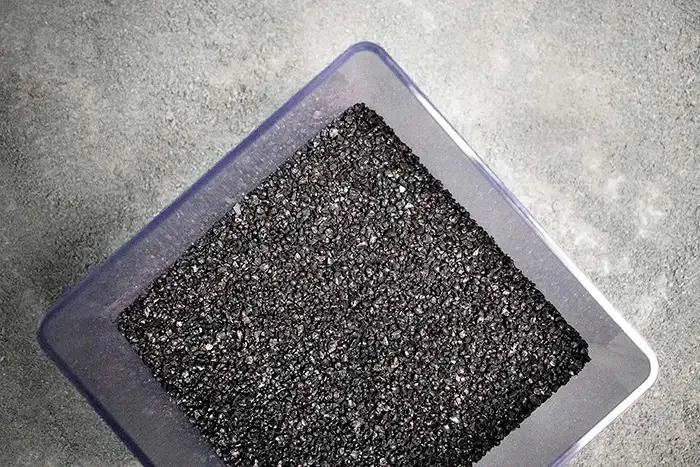
Getting the complete blast cleaning system right
Cleaning performance depends on the complete system. Alongside the machine and abrasive, this can include nozzle selection, available compressed air, dust extraction, media recovery, PPE and RPE, operator training and planned maintenance.
HSE guidance treats abrasive blasting dust as a hazardous exposure that must be properly controlled, so containment, extraction and suitable respiratory protection cannot be treated as optional extras.
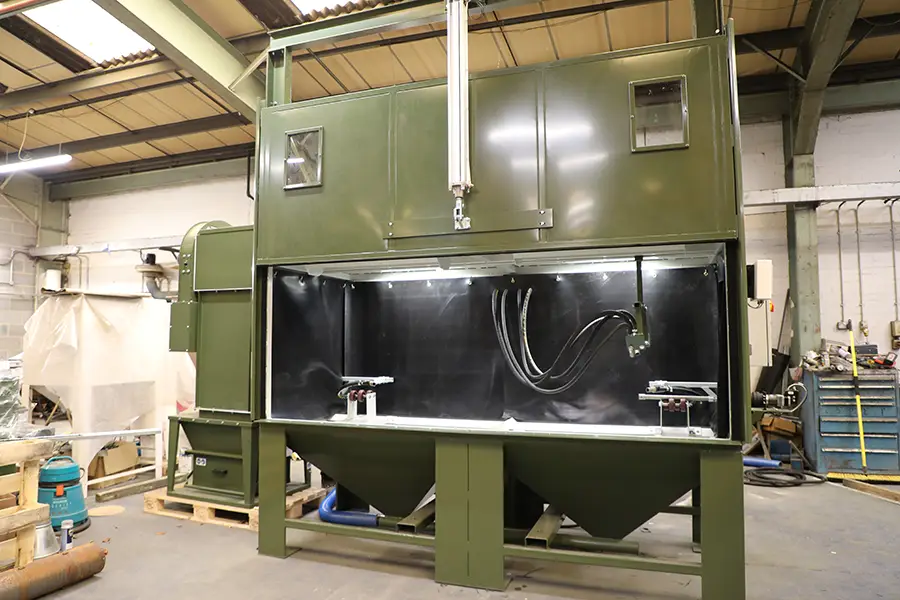
Choosing the right blast cleaning process
SurfacePrep can assess the component or structure, substrate, current surface condition, material to be removed, desired result, production volume and operating environment before recommending equipment and abrasive.
Talk to SurfacePrep about your blast cleaning requirement and define the process before you specify the kit.
Tell us what you need to clean, the material or coating that needs to be removed and the surface condition you need afterwards. Our team can help define the right blast cleaning process, equipment and abrasive.